Five Generations of the ATM
In 1967 the machine handed over one fixed amount of cash; today it takes deposits, recycles the notes back out and puts a live teller on screen. Each era can be read three ways: what the machines could do, who patented the ideas, and who actually built them.
First Generation
Cash Dispensing
- ▸Single-denomination cash dispensing
- ▸Magnetic stripe card authentication
- ▸Fixed-amount withdrawals only
- ▸No screen or minimal LED display
- ▸Mechanical counters for transaction logging
Simjian's earliest verified self-service banking filing (filed April 9, 1959): a machine activated by coded subscriber identification that validates identity and time period, then invalidates the ID against reuse. Batiz-Lazo and Reid identify this, not a mythical 1939 patent, as the real start of the Simjian record; it underpinned the 1961 Bankograph trial at a New York City bank.
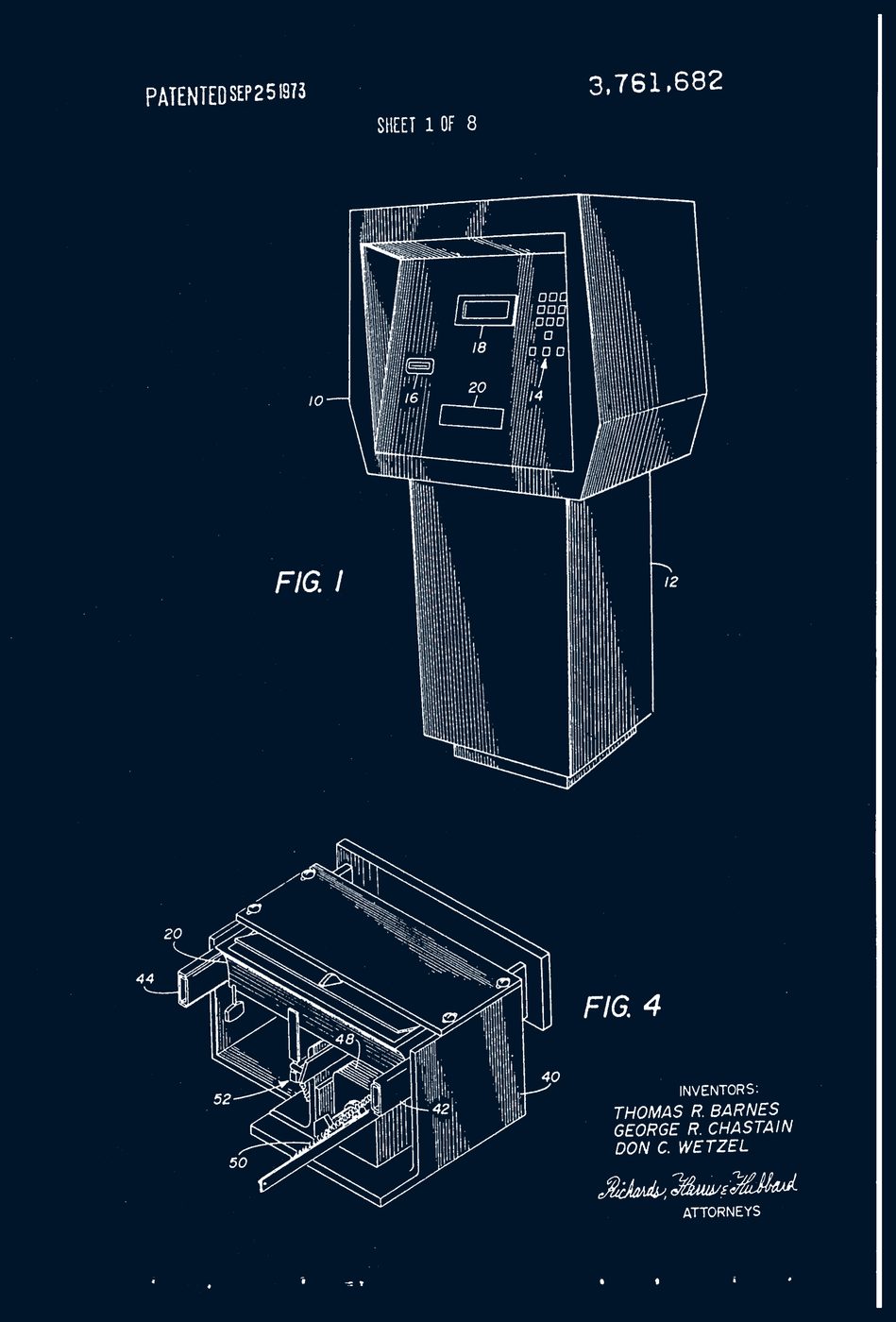
Docutel's networked Total Teller-era system patent whose depository module — envelope transport, serial numbering device, envelope stackers — is the canonical description of first/second-generation ATM deposit: a sealed envelope, serial-stamped for audit, with zero validation of contents. The deposit is a promise, verified later by a human.
The earliest video-teller ATM patent found. A customer at an unattended remote unit presses for help; a teller-assist operator answers by audio, enters the transaction on the bank-station keyboard, and switches 'a picture of the operator taken by the video camera' onto the unit's display. Filed 11 December 1973, thirty years before the interactive teller machine. Cited by the uGenius patent.
Baljevac, Serbia · Canton, USA · Dayton, USA · Dundee, United Kingdom · Higashi Sumiyoshi-ku, Osaka, Japan · Himeji, Japan · Honjo, Japan · Inagi, Japan · Irving, USA · Kita-ku, Tokyo, Japan · Linz, Austria · London, United Kingdom
See all 118 sites on the globe →Second Generation
Multi-Function Terminals
ATMs move out of bank lobbies and into retail locations. The Triton 9500 proves a small-format machine is commercially viable outside a bank, and the independent ATM deployer (IAD) business grows up around it.
- ▸Multi-denomination dispensing
- ▸Balance inquiries and mini-statements
- ▸Envelope deposit acceptance
- ▸CRT displays with function keys (FDKs)
- ▸Electronic journal logging
- ▸Basic transaction sets: withdraw, deposit, balance, transfer
Circulation-type cash handling with mode switching (receive-only / dispense-only / both) driven by container fill levels — the operational logic that makes recycling viable without constant clerk intervention. Omron's recycling IP later merged with Hitachi's in the 2004 Hitachi-Omron Terminal Solutions JV.
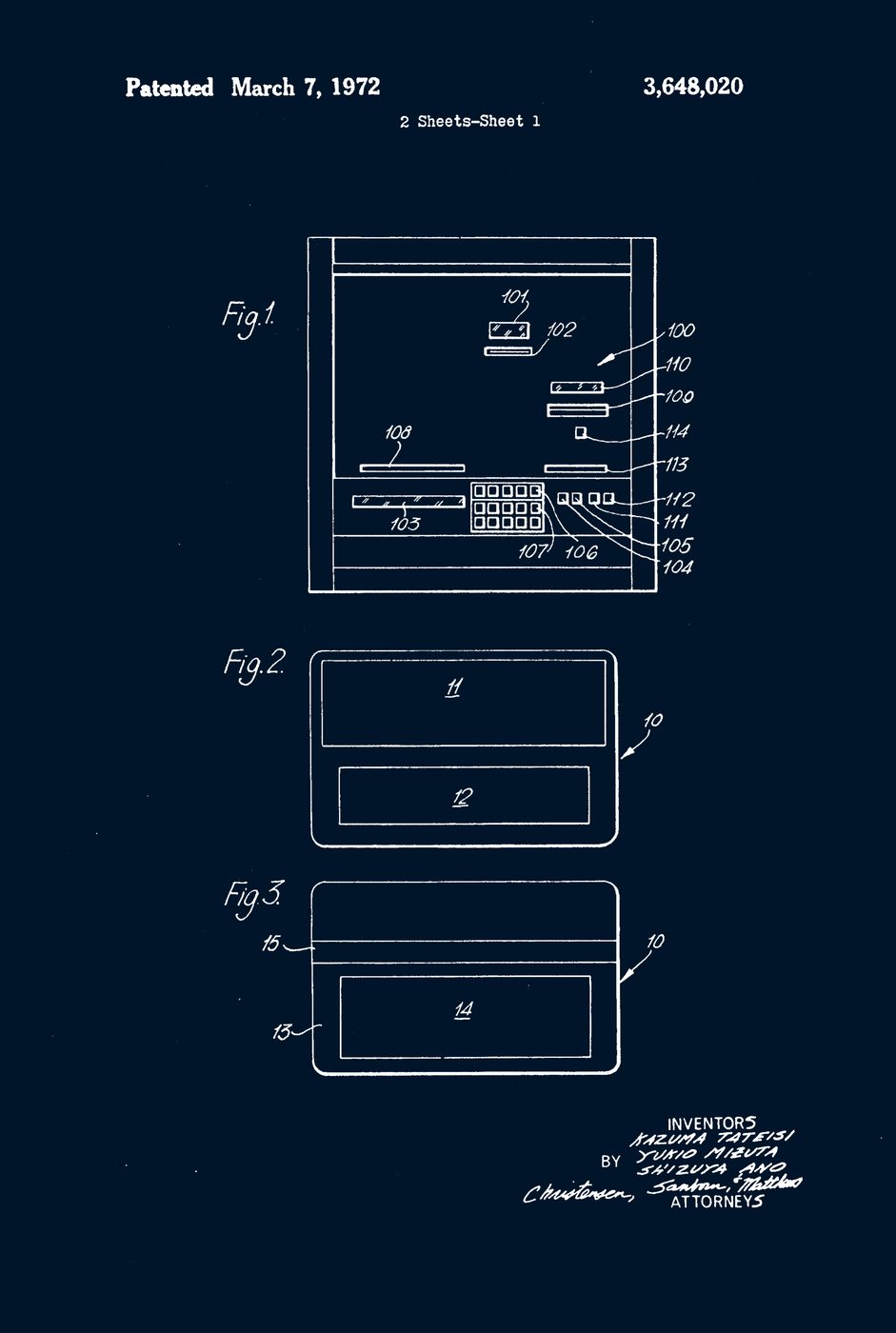
Early Japanese cash-recycling patent: deposited notes are sorted by denomination into pocket sections and re-dispensed as withdrawal cash. Documents the Japanese lead (Toshiba/Hitachi/Omron/Glory) in note recycling roughly two decades before US/European deployers adopted it.
Hitachi's bill recycle module (BRM) family: auto-replenishes recycling boxes from a supply cassette only when the customer sensor shows nobody waiting, pausing if a customer approaches. Early evidence of Hitachi treating the recycler as an inventory-management system, not just a transport.
Carrollton, USA · Fontevivo, Italy · Fukusaki, Japan · Guangming New District, Shenzhen, China · Guangzhou, China · Gumi, South Korea · Hong Kong, Hong Kong SAR, China · Kallang, Singapore, Singapore · Lexington, USA · Lynchburg, USA · Malaga, Spain · Mexico City, Mexico
See all 118 sites on the globe →Third Generation
Intelligent Deposit & Self-Service
Intelligent deposit kills the envelope: the machine counts the notes and images the check itself, and the credit is instant. USB modular architecture makes components interchangeable. The independent deployer market explodes, and ATMs appear in convenience stores, gas stations and bars.
- ▸Envelope-free (intelligent) deposit — cash and checks
- ▸Bulk note acceptance (50+ notes at once)
- ▸Check imaging with MICR reading
- ▸Color touchscreens with marketing content
- ▸USB peripheral architecture (modular components)
- ▸Remote diagnostics and self-healing
- ▸Surcharge-free networks (Allpoint)
- ▸EMV chip card support begins
- ▸Video teller pilots (uGenius Personal Teller Machine, from 2008)
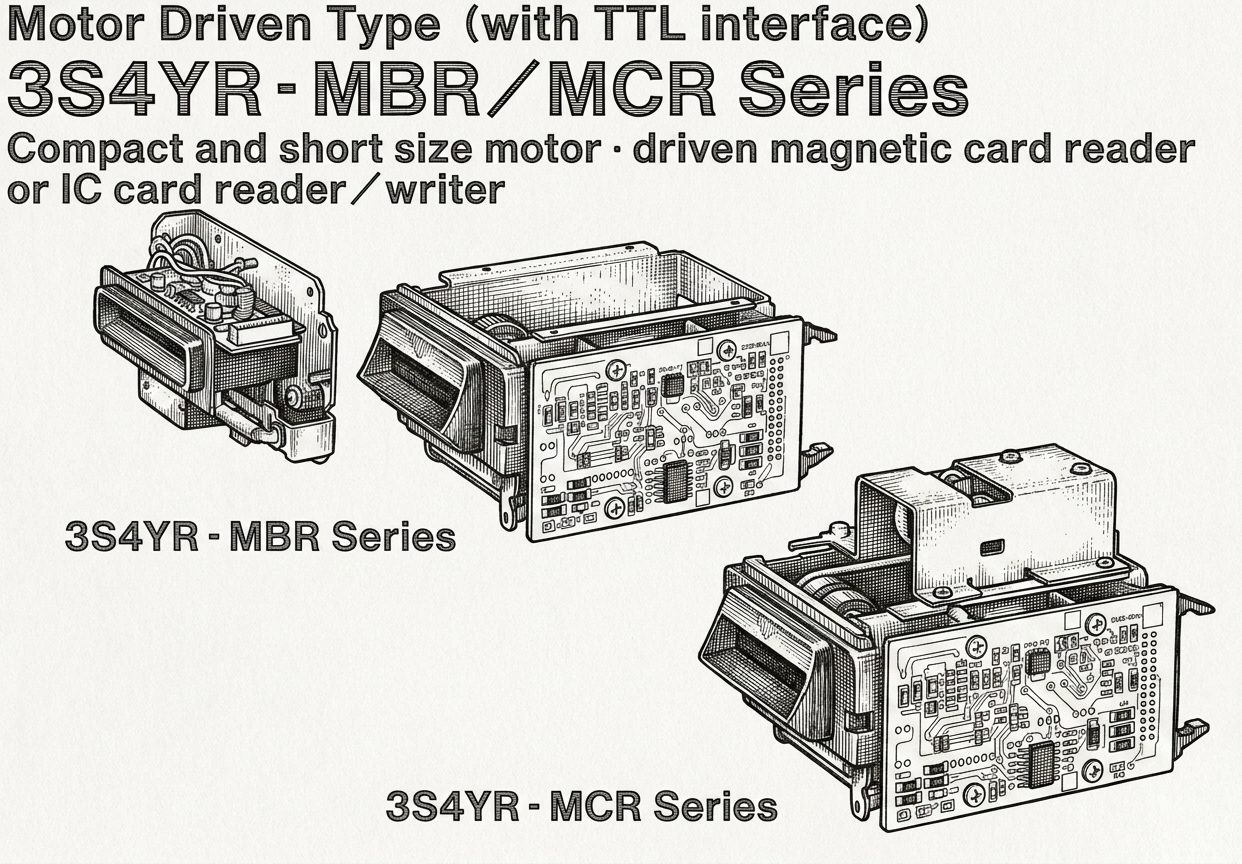
Diebold's late-1990s recycling ABM program: doubles detection, deskewing and centering of documents on a central transport that both accepts deposits (denominating and storing them) and re-dispenses them — note validation moved permanently inside the recycling path.
The foundational jitter patent: intermittent stop-start card transport during insertion/ejection so an externally mounted skimmer cannot recover a clean magnetic-stripe waveform, while the internal head reads continuously once the card is enclosed. Basis of 'jitter' anti-skimming shipped industry-wide.
Firmware-level mutual authentication between ATM components: identity-data hashing and encrypted key exchange so hardware and software components verify each other before transacting. Notable for its Brazilian inventor team — Brazil's epidemic of ATM fraud in the early 2000s made Diebold's Brazilian operation a security R&D source.
Almere, Netherlands · Bartlett (Memphis suburb), USA · Basingstoke, United Kingdom · Beijing, China · Bexbach, Germany · Binan, Laguna, Philippines · Bucheon (formerly Incheon, moved out February 2003); HQ Seoul, South Korea · Budapest, Hungary · Carrollton, USA · Cassis, France · Danville, USA · Durango, USA
See all 118 sites on the globe →Fourth Generation
Cash Recycling & Digital Banking
One machine now takes deposits and dispenses cash from the same pool of notes, cutting CIT (cash-in-transit) costs. ITMs put a teller on video and extend teller hours without extra staff. ATMs handle 80%+ of routine transactions and start replacing teller windows. Diebold and Wincor merge in 2016; NCR splits in 2023.
- ▸Cash recycling — deposited notes are re-dispensed
- ▸Check imaging with instant funds availability
- ▸Mixed-media deposit (cash + checks in one transaction)
- ▸Interactive Teller Machines (ITM) with live video
- ▸Contactless card (NFC) transactions
- ▸Cardless access via mobile phone
- ▸Dynamic marketing on screens
- ▸Predictive maintenance via IoT sensors
- ▸Branch transformation — ATMs replace teller windows
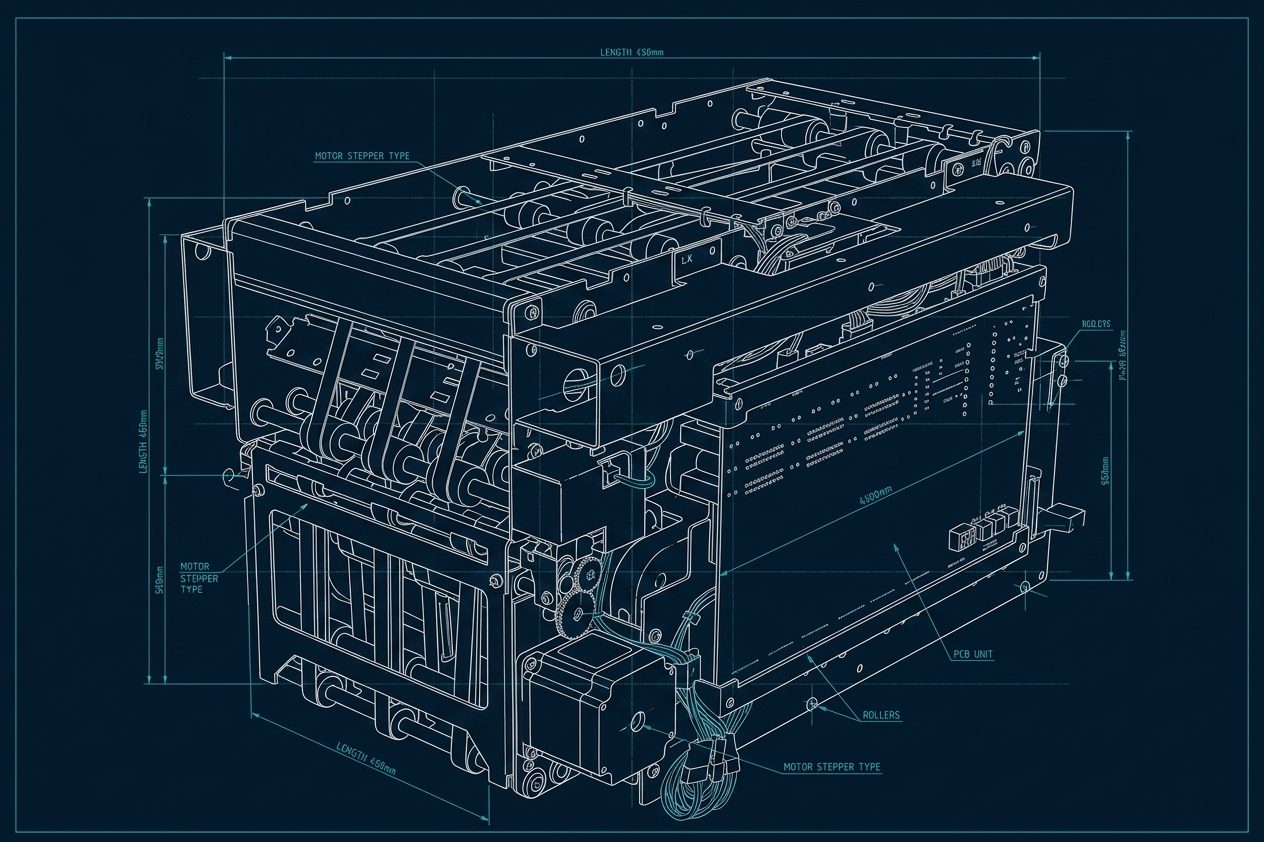
Late-stage NCR check-imaging patent: an image-based depositing ATM with dual cameras (front/rear images) that emails or web-links the acknowledgement instead of printing it. Evidence of how thoroughly the imaging core was settled by 2008 — the patentable frontier had moved to the receipt.
Nidec Sankyo's orientation-based defense: conveying the card in its short-side (width) direction with an abutting end-alignment mechanism, and detecting both longitudinal card ends to reject improper insertions that could enable illegal data acquisition — the OEM-side sibling of the 'rotate the stripe away from the skimmer' concept Diebold commercialized as ActivEdge.
Anti-internal-skimming hardware: an internal plate with pre-weakened bend/break zones blocks insertion of skimmers inside the reader throat and deliberately deforms if extracted, bricking the reader — designed against the 'deep-insert' skimmer wave that followed successful external-skimmer countermeasures.
Alpharetta, USA · Basingstoke, United Kingdom · Columbus, USA · Glostrup (Copenhagen area), Denmark · Greensboro, USA · Guangdong (municipality not specified), China · Haiphong, Vietnam · Hyogo prefecture (exact plant address not located), Japan · Kazo, Japan · Manaus, Brazil · Sao Paulo state (municipality not established), Brazil · Sao Paulo, Brazil
See all 118 sites on the globe →Fifth Generation
Connected Self-Service Ecosystem
ATM-as-a-Service lets a bank subscribe to its fleet instead of buying it: CapEx becomes OpEx. Cash recycling is standard now, not a premium option. Predictive maintenance moves from threshold rules to models trained on terminal telemetry. Three names are left at the top: NCR Atleos (58% global share), Diebold Nixdorf (post-bankruptcy restructuring) and Hyosung Innovue. Glory, Hitachi-Omron and Nidec Sankyo still make the mechanisms inside them.
- ▸ATM-as-a-Service (subscription model)
- ▸Cloud-native software platforms
- ▸AI-powered predictive maintenance
- ▸Biometric authentication (palm, iris, facial)
- ▸Cryptocurrency/Bitcoin ATM convergence
- ▸Open banking API integration
- ▸Video-assisted self-service at scale
- ▸Sustainability focus (energy efficiency, reduced cash handling)
- ▸Windows 11 IoT Enterprise
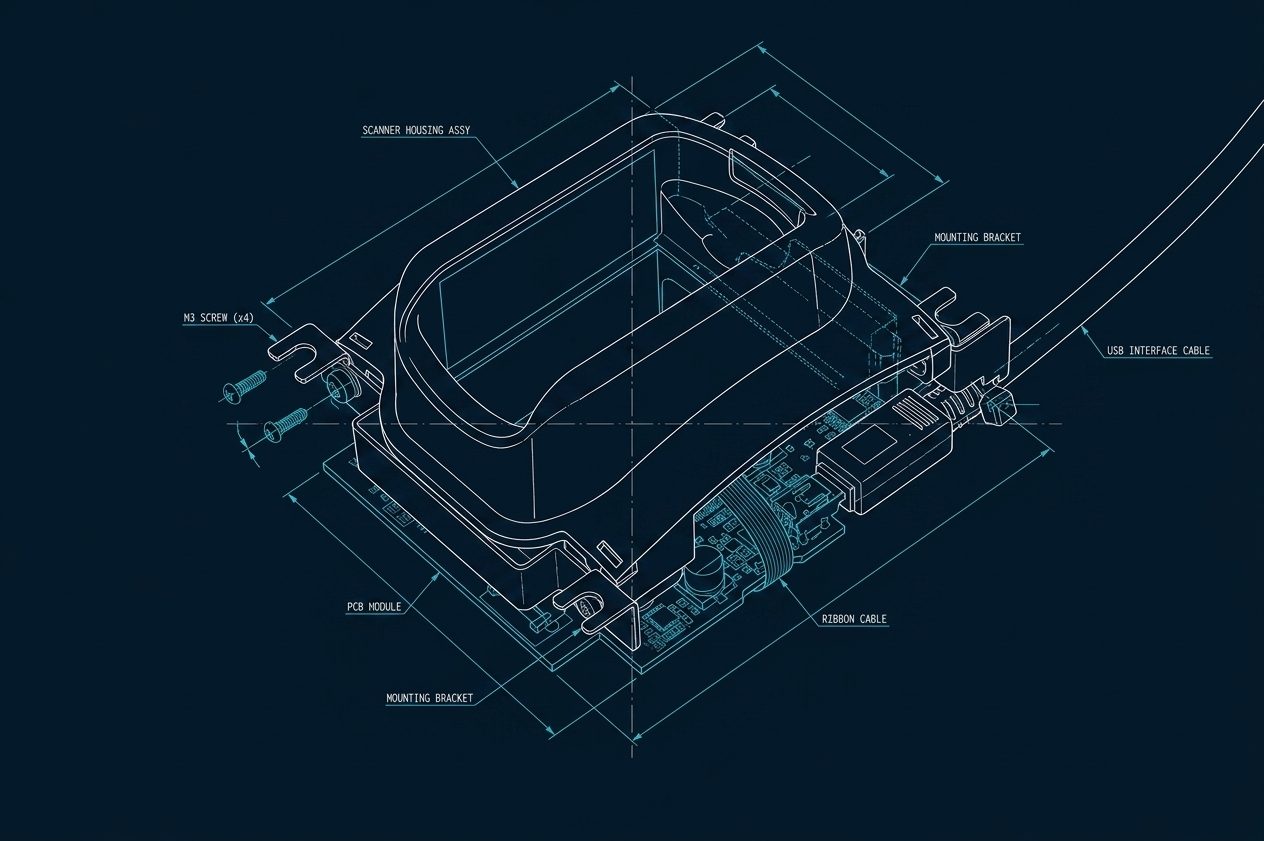
The dominant OEM absorbing the anti-skimming stack into the reader itself: a disturbing-magnetic-field (jamming) generator built into the card reader, with soft-adhesive-filled gaps between core/bobbin/board/housing to suppress the audible vibration noise jamming coils cause.
Current state of the art on file: multiple ML models trained on terminal telemetry compete, the best is deployed, and models continuously retrain. The claims cover ATMs explicitly, among other self-service terminals. Predictive maintenance has moved from the threshold rules of the 2009-2011 filings to MLOps. Still pending as of August 2026.
Binan, Laguna, Philippines · Markersdorf, Germany · Velbert, Germany · Verona, Italy
See all 118 sites on the globe →The teller comes back, on a screen
Every generation of the ATM took a person out of the transaction. One line of machines has spent sixty years putting a person back, at a distance.
Full account: research/analysis/history/video-teller-itm.md
17 dated milestones, 1964–2024.
Show the full patent trail
- 1964Television drive-up tellers
First National Bank of Atlanta and Northwestern National Bank of Sioux Falls installed Mosler's TV Auto-Banker, a teller on closed-circuit television at the drive-up lane. source ↗
- 1972Diebold files remote banking with closed-circuit television
Diebold filed a patent for cash dispensed at an unmanned station over closed-circuit television to a remote teller, with pneumatic tubes for paper. source ↗
- 1973Diebold puts the teller's picture on the customer's display
Diebold's 1973 filing let a stuck customer call a teller-assist operator by audio, with the operator's picture switched onto the remote unit's screen. source ↗
- 1983NCR makes the teller's key release the cash
NCR patented a teller station where the teller's function key releases the cash after reviewing the customer's cheque and ID. source ↗
- 1992NCR shows video-hookup ATMs
Two Cleveland and San Francisco newspapers reported NCR's video-hookup ATMs in 1992, later cited on the face of NCR's 1995 patent. source ↗
- 1994Huntington opens the first 'Access' branch in downtown Columbus
Huntington Bancshares opened the first video-banking 'Access' branch in downtown Columbus, growing to fifteen branches by the end of 1996. source ↗
- 1995NCR's Dundee engineers file the video-conferencing ATM
NCR engineers in Dundee, Scotland, and Ohio patented a video-conferencing ATM, adding a camera, microphone and speaker to the terminal. source ↗
- 2004Gene Pranger files the Personal Teller Machine patent
Coastal Federal Credit Union designer Gene Pranger filed the Personal Teller Machine patent in 2004, after staff rejected Diebold's pneumatic-tube remote tellers. source ↗
- 2008Coastal FCU and Mid-Hudson Valley FCU put PTMs in branches
Coastal FCU and Mid-Hudson Valley FCU began installing Personal Teller Machines in branches in 2008, Coastal reaching thirty within a year. source ↗
- 2011NCR unveils APTRA Interactive Teller; Coastal goes all-video
NCR unveiled APTRA Interactive Teller in May 2011, the month Coastal FCU reported sixty video teller terminals and no counter tellers. source ↗
- 2012NCR buys into uGenius; Diebold launches Concierge Video Services
NCR took a minority stake in uGenius in January 2012, and Diebold piloted its Concierge Video Services at Missoula FCU that October. source ↗
- 2013NCR owns uGenius; Bank of America opens the ATM with Teller Assist
NCR completed its acquisition of uGenius on 31 December 2012; Bank of America opened its first ATM with Teller Assist in Boston in April 2013. source ↗
- 2014Hyosung's drive-up video banker; NCR passes 150 institutions
Hyosung launched the MX7800i drive-up video banker in October 2014, weeks after NCR said it had sold Interactive Teller to 150 institutions. source ↗
- 2016More than 300 institutions on NCR's interactive branch technology
NCR reported more than 300 institutions using its interactive branch technology by August 2016, covering 95 per cent of teller transactions. source ↗
- 2017Extraco Banks wires Hyosung ITMs straight to the core
Extraco Banks integrated Hyosung ITMs directly with its core processor in 2017, instead of routing them through the ATM switch. source ↗
- 2020What it costs: a quarter of surveyed institutions have ITMs
A 2020 survey of 61 banks and credit unions found a quarter had ITMs, costing $55,000 to $80,000 per machine. source ↗
- 2024The founder patent leaves the ATM company
The ITM's founder patent, US 7,814,016, left NCR for Digital First Holdings LLC in September 2024, ending its run with the ATM business. source ↗
- The head unit
- A camera, a microphone and a speaker or handset above the glass; an ID-document scanner and a signature pad in the fascia. NCR's 2011 brochure lists exactly these: video camera and capture card, photo ID scanner, signature capture device, microphone. Pranger's patent adds a coin dispenser and a bulk note acceptor, because the machine was meant to do everything a teller did.
- The teller's console
- Software on a workstation in a call centre, one teller to many machines. The teller sees the customer, the scanned ID and the cheque image, and drives the terminal's peripherals from a control panel: dispense cash, print receipt, show signature, show ID image. Hyosung's phrase for it is 'many terminals to one teller'.
- Who is allowed to say yes
- The card and PIN still authenticate, and the bank's host still posts the entry. What moves is the release. The teller's key, not the switch's response, lets the machine cash a cheque to the penny, take a loan payment or exceed the card's daily limit. NCR's Interactive Teller ran in video-teller-only mode until First Data certified it for ordinary switched ATM transactions in late 2013; the two paths are separate authorisations on one terminal.
- Where the transaction goes
- Three ways to wire it. A video overlay on an existing switched ATM: Diebold's 2012 Concierge, with CO-OP supplying the terminal and the network. A terminal connected straight to the bank's core, 'rather than using traditional ATM switch integration': Hyosung's 2017 Extraco Banks installation. Or on-us transactions to the core and everything else through the switch: Diebold Nixdorf's DN Series.
- The queue
- A fleet of ITMs creates a staffing problem at the other end of the wire. Bank of America patented routing customers to remote agents by priority and site congestion in 2012. The 2020 survey found one agent covering 2.4 machines, and the infrastructure behind the agents costing $250,000 to $500,000.
Who was first, in the patent record: Simjian's deposit machines, Goodfellow's PIN, De La Rue's radioactive token for the 1967 Barclays machine, the magnetic stripe, Docutel's free-standing dispenser, Atalla's encrypted PIN, and the two chip-card lines EMV standardised. Detail in research/analysis/patents/origins-first-atms.md and card-credential-milestones.md.
| Patent | Title | Assignee | Filed | Granted | Why it matters |
|---|---|---|---|---|---|
| US3039582A | Subscriber controlled apparatus | Universal Match CorpLuther G. Simjian | 1959 | 1962 | Simjian's earliest verified self-service banking filing (filed April 9, 1959): a machine activated by coded subscriber identification that validates identity and time period, then invalidates the ID against reuse. Batiz-Lazo and Reid identify this, not a mythical 1939 patent, as the real start of the Simjian record; it underpinned the 1961 Bankograph trial at a New York City bank. |
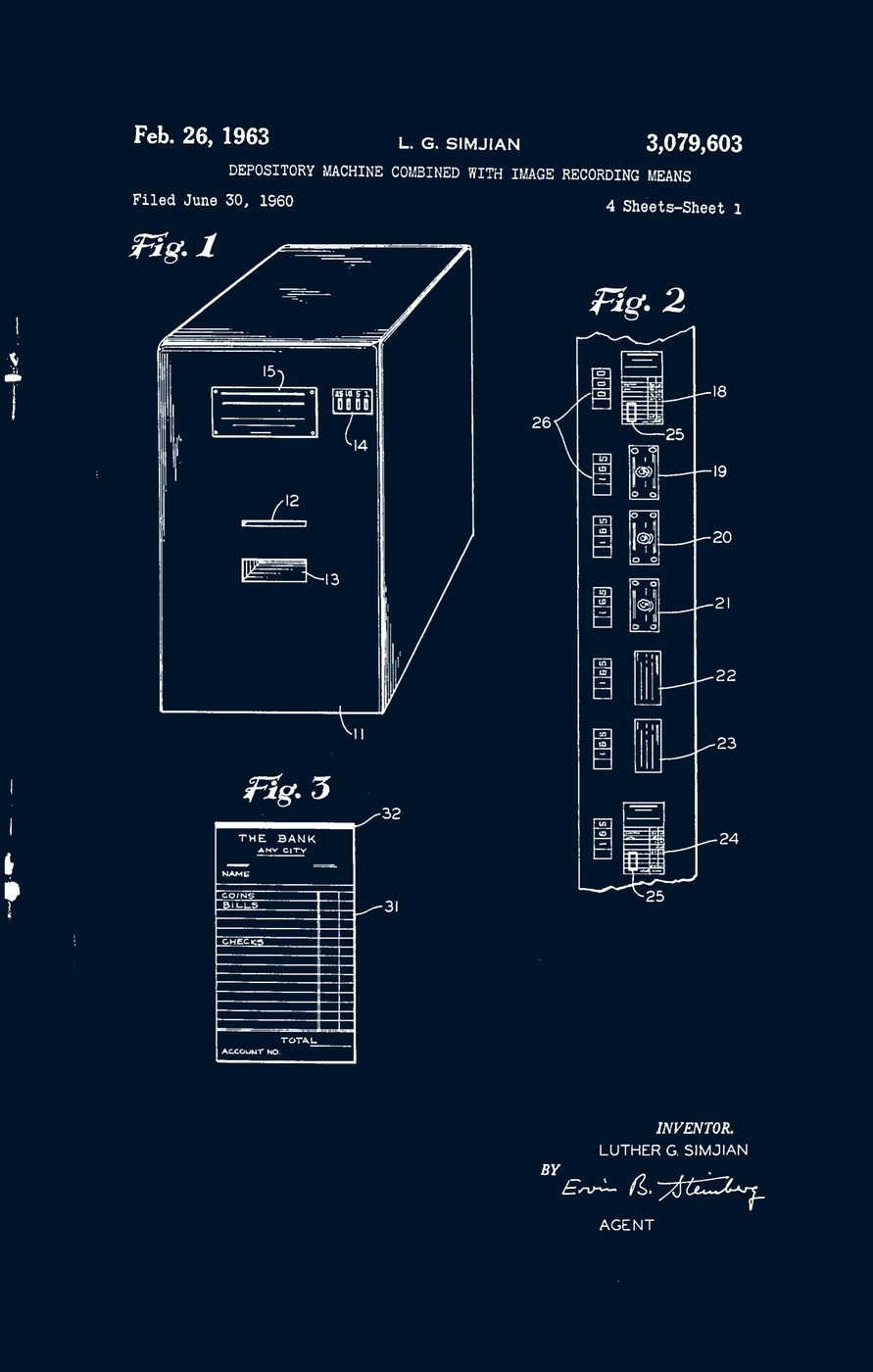
| US3079603A | Depository machine combined with image recording means | Universal Match CorpLuther G. Simjian | 1960 | 1963 | The classic 'Bankograph' patent (filed June 30, 1960): an automated deposit machine that photographs each deposited item and returns a validated tag as a receipt. Deposit-only — no cash dispensing — but the first patented machine to let a bank customer transact unattended. |
| GB990256A | Improvements in or relating to security documents and monetary tokens | Thomas De La Rue and Co LtdStefan Klazkowski, Barry Birch Goalby | 1962 | 1965 | De La Rue's radioactive-token patent (filed March 26, 1962): carbon-14 or tritium embedded in inks, paper pulp, or threads for authenticity verification. This is the verification technology behind the C-14-impregnated vouchers used by the world's first deployed cash machine, the Barclays/De La Rue DACS (Enfield, June 27, 1967) — the DACS machine itself was never patented. |
| GB1197183A | Improvements in or relating to customer-operated dispensing systems | Smiths Group PLC (filed via Smiths Industries / Kelvin Hughes)Anthony Ivan Oliveira Davies, James Goodfellow | 1966 | 1970 | THE foundational PIN patent (filed May 2, 1966; published July 1, 1970): a coded token compared against a manually entered number to authorize dispensing. Batiz-Lazo & Reid call it 'the earliest instance of a complete currency dispenser system in the patent record.' It secured the Chubb MD2 deployed by Westminster Bank on July 31, 1967, and NCR and IBM later licensed Goodfellow's PIN system. This … |
| US3905461A | Access-control equipment | Chubb Integrated Systems LtdAnthony Ivan Oliveira Davies, James Goodfellow | 1966 | 1975 | US counterpart of GB1197183 (US filing May 1, 1967, claiming the May 2, 1966 GB priority; not granted until September 16, 1975). Its assignment to Chubb Integrated Systems documents how the Smiths/Kelvin Hughes PIN invention ended up as Chubb IP. The nine-year pendency meant the PIN concept was public and widely copied long before the US grant. |
| DE1945777A1 | Identifizierungsschalter (Identification switch) | Intelectron Patentverwaltung GmbH (later GAO Gesellschaft für Automation und Organisation mbH)Jürgen Dethloff, Helmut Gröttrup | 1968 | 1982 | The chip card's first filing: an identification switch built around an integrated circuit in a card, Austrian priority 13 September 1968, German filing 10 September 1969, published 2 July 1970. The C3 grant (DE1945777C3) did not issue until 1 April 1982. EMV's chip descends from this line and from Moreno's. |
| GB1329964A | Apparatus for dispensing items in response to the presentation of a security card | Burroughs Corp (originally the Speytec team; later Unisys)John David Edwards, Leonard Perkins | 1969 | 1973 | The Speytec/Midland Bank machine (priority September 9, 1969; published September 12, 1973): reads magnetically encoded data from a card, validates against a customer-entered PIN, dispenses currency, and keeps audit records via punch marks and vouchers. First patent family built around a magnetic-stripe card for cash withdrawal in the UK; became the Burroughs RT2000 after Speytec was absorbed into… |
| US3653066A | Magnetic transfer imprinter | International Business Machines CorpDavid Royse, Guenther K. Machol | 1969 | 1972 | IBM's earliest verified patent that assumes a credit card carrying an encoded magnetic stripe: a point-of-sale imprinter that reads the stripe. IBM chose to publish Forrest Parry's stripe card itself (IBM Technical Disclosure Bulletin, November 1960) rather than patent it, which is why no patent for the card exists. |
| US3685690A | Credit card automatic currency dispenser | Docutel CorpMarion R. Karecki, George R. Chastain | 1970 | 1972 | The earlier Docutel filing in the family that produced US3761682 (the Wetzel patent). Its text describes the ATM card as carrying 'a stripe of magnetic material located on the backside' holding up to 80 numeric characters: the earliest verified magnetic-stripe ATM card patent in this corpus, alongside Speytec's GB1329964 (priority September 1969). |
| US3761682A | Credit card automatic currency dispenser | Docutel CorporationThomas R. Barnes, George R. Chastain | 1971 | 1973 | The canonical US ATM patent: Don Wetzel's Docutel team's card-actuated currency dispenser (currency packets, format/identity verification, controlled cash drawer). Part of a family with US3651986A and US3662343A. |
| US3938091A | Personal verification system | Atalla Technovations CorpMartin M. Atalla, Alexander F. Liu | 1972 | 1976 | The Atalla PIN-security patent (priority March 17, 1972; filed July 19, 1974; granted February 10, 1976): customer enters a secret password into an encoding machine that generates a code word for comparison — the foundation of hardware PIN encryption and the 'Atalla Box' HSMs that came to protect the majority of the world's ATM transactions. Marks the transition from Goodfellow's electromechanical… |
| US4007355A | Data-transfer system | Société Internationale pour l'Innovation S.A. (Innovatron)Roland Moreno | 1974 | 1977 | The US counterpart of Moreno's French filing of 25 March 1974 (FR2266222): a portable object carrying a memory that talks to a terminal, the 'carte à puce'. France's Cartes Bancaires put chips in bank cards from the late 1980s; EMV, the chip-card standard ATMs and card readers now implement, was published by Europay, MasterCard and Visa in 1996. |
Drive-up intercoms and tubes, then the teller's judgement inside the transaction. Diebold's 1998-priority grant is listed here by its priority date; it was granted in 2015.
| Patent | Title | Assignee | Filed | Granted | Why it matters |
|---|---|---|---|---|---|
| US3849603A | Remote banking intercom system | Mosler Safe CoS. Proios | 1972 | 1974 | The drive-up lane before video: an audio intercom between the teller booth and the customer's car. Mosler, the Hamilton, Ohio safe maker, patented the plumbing that pneumatic-tube banking ran on. |
| US3949364A | Automatic remote banking system and equipment | Diebold Inc | 1972 | 1976 | Diebold's earliest filing in the lineage, priority 7 July 1972: cash dispensed 'at an unmanned station from a money vault unit located at a remote station', with 'visual television communication by closed circuit television' between the customer's screen and the teller's, and pneumatic tubes for the paper. The drive-up TV teller and the remote cash dispenser in one system. |
| US3874622A | Remote teller | Rothenbuhler Engineering IncGalen A. Biery Jr., Dan E. Rothenbuhler | 1973 | 1975 | Literally titled 'Remote teller': an underground monorail carrier between the drive-up island and the teller, with microphone and speaker. The text notes that some rival systems already included closed-circuit television; this one did not claim it. |
| US3876864A | Teller-assisted currency dispenser system | Diebold IncRobert W. Clark, Philip C. Dolsen | 1973 | 1975 | The earliest video-teller ATM patent found. A customer at an unattended remote unit presses for help; a teller-assist operator answers by audio, enters the transaction on the bank-station keyboard, and switches 'a picture of the operator taken by the video camera' onto the unit's display. Filed 11 December 1973, thirty years before the interactive teller machine. Cited by the uGenius patent. |
| US4059246A | Pneumatic tube banking system | Diebold IncWalter G. Anders, Michael A. Cole | 1976 | 1977 | Diebold's drive-up tube system, the product line it later marketed as the 'visual auto teller': the teller sees the car through a window and talks over audio. Same company, same decade as US3876864, and no video in the claims; the sightline did the job the camera would later do. |
| US4580040A | Teller-assisted, customer-operated ATM check cashing system | NCR CorporationRobert H. Granzow, Kimbrough L. Myers | 1983 | 1986 | The split of authority that defines an ITM, in 1983: the ATM carries the cheque and the customer's ID through a document transport to a teller station, the teller evaluates the cheque against account data on a screen, and only the teller's function key lets the ATM dispense. Cited by the uGenius patent. |
| US4617457A | Teller-assisted, customer-operated ATM document cashing system | NCR CorporationRobert H. Granzow, Kimbrough I. Myers | 1983 | 1986 | The sister filing, ten weeks later: instead of carrying the paper cheque to the teller, each ATM has an imager that presents a picture of the cheque on the teller station's display, and the teller's function keys decide. The scanned-document-plus-remote-approval pattern every ITM uses, filed 19 December 1983. Cited by the uGenius patent. |
| US4845636A | Remote transaction system | Mark E. Walker (individual)Mark E. Walker | 1986 | 1989 | A public transaction booth with audio and video lines to a central operations centre and automated dispensing: the unattended video-served kiosk as an individual inventor's filing, three years before the banks' own. Cited as prior art by NCR's 1995 video-conferencing ATM. |
| US5604341A | ATM as video conferencing station | AT&T Global Information Solutions Company (NCR)Mark M. Grossi, Grant C. Paton | 1995 | 1997 | NCR's first ATM-with-video patent, filed 13 March 1995 by two Dundee engineers and one in Ohio while NCR traded as AT&T GIS. A camera, microphone and speaker on a standard ATM for a video conference with a bank officer, for a loan application. Its front page cites 1992 newspaper coverage of NCR's video-hookup ATMs. Cited by the Diebold and Bank of America video patents. |
| US5774663A | Personal banker customer management system providing interactive video communication in real time concerning banking information | Huntington Bancshares Inc (current assignee of record: DataTreasury Corp)William M. Randle, John Voss | 1995 | 1998 | The bank-side 1990s video-kiosk patent: centralised 'personal bankers' serve customers at remote kiosks over real-time video, filed 5 September 1995 by Huntington Bancshares of Columbus, Ohio. A bank, not a manufacturer, holding the IP on video banking a decade before uGenius. |
| US8955743B1 | Automated banking machine with remote user assistance | Diebold, Incorporated (Self-Service Systems division)James Block, H. Thomas Graef | 1998 | 2015 | Diebold's remote-assistance counterpart to the uGenius approach: welcome terminals, routing to remote personnel, audio/video assistance during transactions. Notable for its 1998 priority date reached through Diebold's long continuation-chain strategy (filed 2012, granted 2015). |
The founder patent and everyone's answer to it.
| Patent | Title | Assignee | Filed | Granted | Why it matters |
|---|---|---|---|---|---|
| US7814016B2 | Personal teller system and method of remote interactive and personalized banking | uGenius IP Holdings LLCEugene P. Pranger | 2004 | 2010 | The foundational video-teller (ITM) patent: customers at 'Personal Teller Machines' transact with remote tellers via audio/video from a centralized call center. uGenius was acquired by NCR in January 2013, making this the IP root of NCR Interactive Teller. |
| US7322516B2 | Using a remote terminal to conduct assisted self-service transactions in a banking facility | NCR Corporation (current assignee of record: Digital First Holdings LLC)Gerard Savage, Norman Taylor | 2005 | 2008 | NCR's own answer before it bought uGenius: a branch teller with a handheld terminal monitoring self-service machines and stepping in on data, with no audio or video. The 'assisted self-service' idea without the camera. |
| US7490761B2 | Conducting assisted self-service transactions where approval is needed | NCR Corporation (current assignee of record: Digital First Holdings LLC)Norman G. Taylor, John G. Savage | 2005 | 2009 | The approval step on its own: a self-service transaction that pauses for a teller's authorisation before it completes. Same 2005 priority as US7322516, same NCR team. |
| WO2011003353A1 | Visualized self-service terminal, remote interactive self-help bank system and service method | GRG Banking Equipment Co LtdDong Xuewen, Xiao Dahai | 2009 | pending | China's ITM: GRG Banking's self-service terminal with remote voice and video to a staff terminal, Chinese priority 9 July 2009, published under the PCT in January 2011. Hyosung's history page records a 'Chinese standard Video Teller Machine (VTM)' in 2014, which suggests the category had its own standard there. |
| US8896653B2 | Video-assisted self-service transaction device | Bank of America CorporationTyler R. Johnson, Therese H. Willis | 2011 | 2014 | The deployer's patent from the Teller Assist era: a self-service device with two-way audio and video to a remote agent, and logic to switch video off when the queue for an agent is too long. Priority July 2011, two years before Bank of America's public launch. |
| US8332319B2 | Personal teller system for remote interactive and personalized banking | uGenius Technology LLC (current assignee recorded as uGenius IP Holdings LLC)Eugene P. Pranger | 2004 | 2012 | A second granted continuation from the 2004 priority, filed 2012. Google Patents' assignment log records the reassignment to NCR Corporation on 2013-01-18, which dates the NCR/uGenius acquisition to the day. |
| US9317842B2 | Dynamic allocation of video resources | Bank of America CorporationJames David Freedman, Tyler Johnson | 2012 | 2016 | The call-centre side of a video-teller fleet: a controller that routes customers at 'video transaction machines' to remote agents by priority and site congestion. The problem an ITM creates is staffing the other end of the wire, and this is the patent for that. |
| US9189814B2 | Method of providing remote financial service using remote video banking machine | Nautilus Hyosung Inc (Hyosung TNS)Bo Ik Chang, Sung Suk Hong | 2012 | 2015 | Hyosung's video banking machine: a scanner and printer plus video consultation with a bank officer for loans and account opening, Korean priority 1 November 2012. A companion application (US20140337213A1, a consultant joining mid-transaction and driving the ATM screen) was abandoned in 2015. |
| US10706426B2 | Automated remote transaction assistance | NCR Corporation (NCR Atleos)Joseph Ward, Jeffrey L. Christensen | 2014 | 2020 | NCR's first ITM filing after the uGenius purchase, April 2014: a live video session with a remote expert who can trigger the terminal's peripherals, with the captured document data flowing to the expert automatically. The Pranger architecture, restated by the buyer. |
| US9640041B2 | Automated banking machine with remote user assistance | Diebold, Incorporated (Diebold Nixdorf)James Block, H. Thomas Graef | 2011 | 2017 | The continuation of Diebold's US8955743 line: camera and audio to a 'remote service provider station', with the session handed to the customer's own phone. Google Patents shows a 2011 priority for this member of the family rather than the 1998 date the parent carries. |
| US10825002B2 | Videoconferencing with a customer device | Diebold Nixdorf, IncorporatedW. Edward Crooks | 2016 | 2020 | Diebold Nixdorf's post-merger ITM filing, priority 13 April 2016: the remote teller's video, audio and screen can be routed either to the ATM or to the customer's own phone. Continued as US11610189B2 (granted 2023). |
Who Actually Builds an ATM
The brand on the fascia rarely made what is behind it. NCR part 445-0704482, Diebold 49-209540-000B and Hyosung S5645000062 are all Nidec Sankyo ICT3Q8 card readers.
How Each Part Changed
Sources: Wayback Machine archives of 20 manufacturers; 174 patents checked against Google Patents; a 118-facility manufacturing registry drawn from SEC filings, newspaper archives and corporate histories; component supply-chain analyses. Of the 118 sites, 105 carry a date that puts them in one of the eras above; the other 13 are dated in the registry by fiscal year alone, or not at all. Per-claim confidence grades in research/analysis/.
The machine and the map
Inside the ATM
Ten components. For each one: the patent that defines it, the companies that actually manufacture it, and how it changed across these five generations.
ATM Makers of the World
118 manufacturing sites in 27 countries, plotted on a globe. The ATM was invented in three places at once. The industry then moved to Asia and consolidated to near-single-source.